.png)
Inside Maloney Construction's LeeTran Beach Park & Ride Canopy Rehab in Fort Myers

Updated: Sep 29
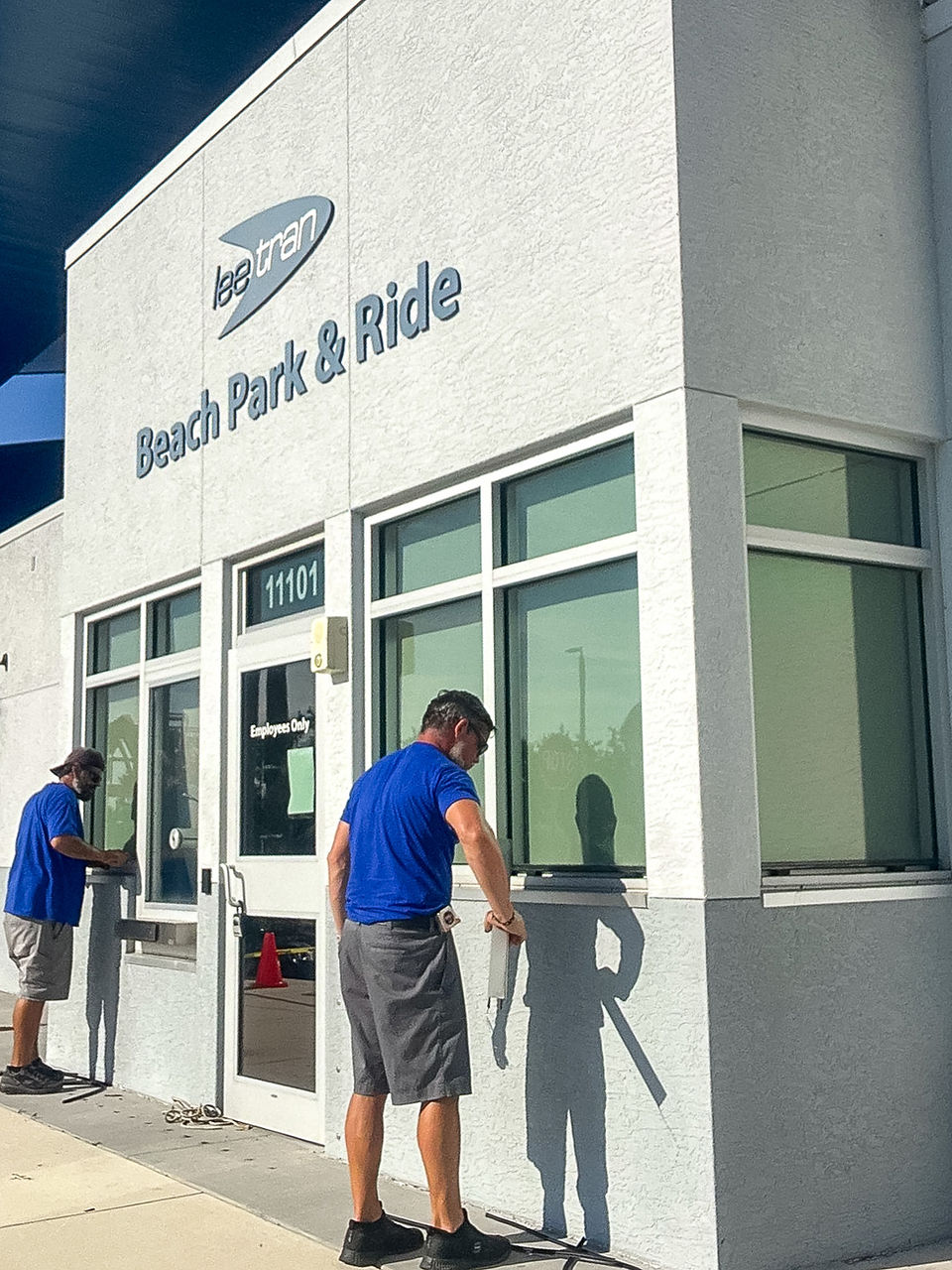
Not every commercial project happens behind a fence with the doors closed. Some of the most demanding rehab work happens in public, on a facility that can't simply shut down while the work gets done. That's the case at LeeTran's Beach Park & Ride in Fort Myers, where Maloney Construction is leading a full rehabilitation of the transit canopy that shelters riders, trolleys, and buses moving through one of Lee County's busiest park-and-ride hubs.
The project covers the entire canopy system over the boarding area — support poles, structural framing, roofing, and finish ceiling panels — all while the stop continues to serve daily riders. Here's how the work has progressed, phase by phase.
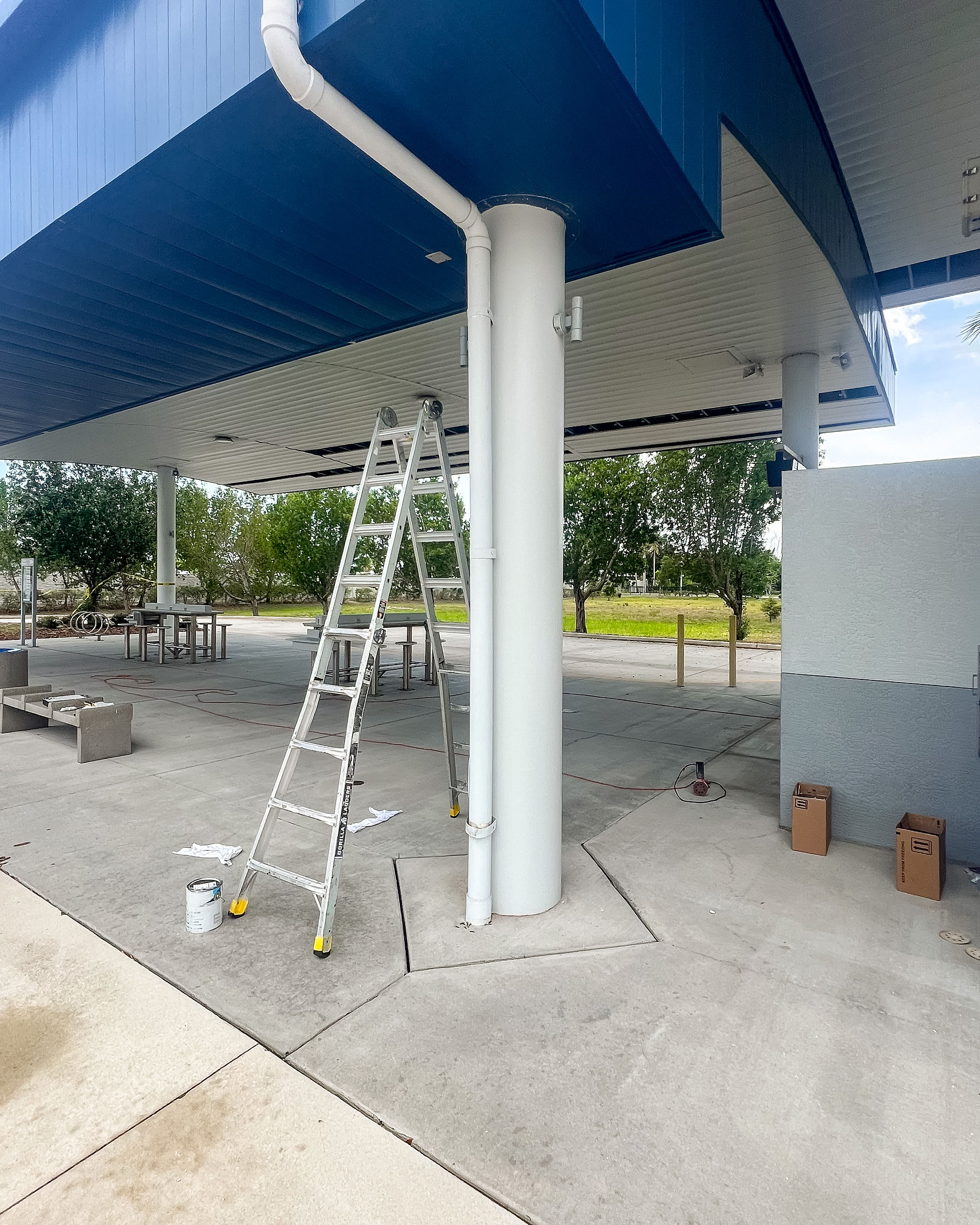
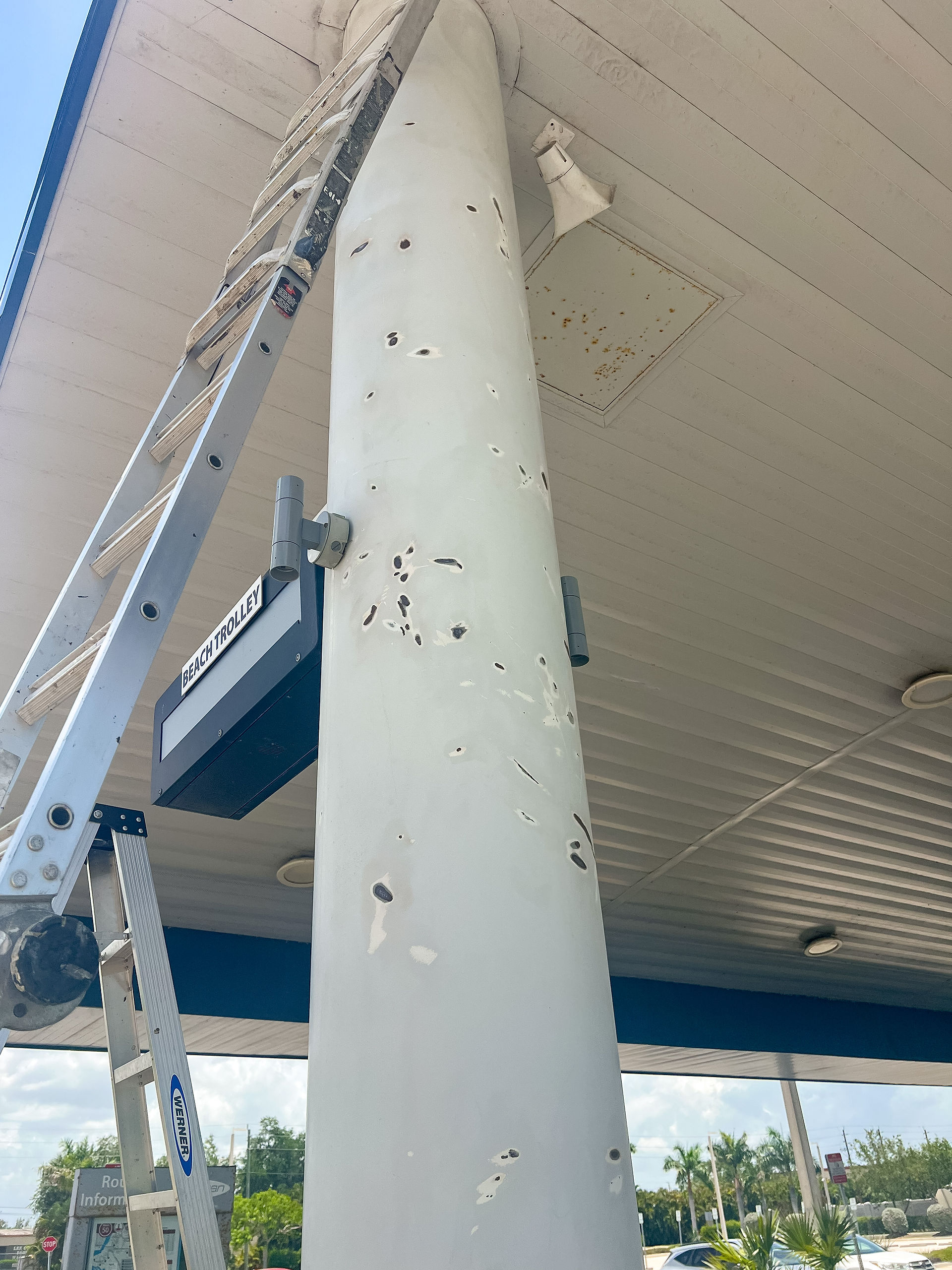
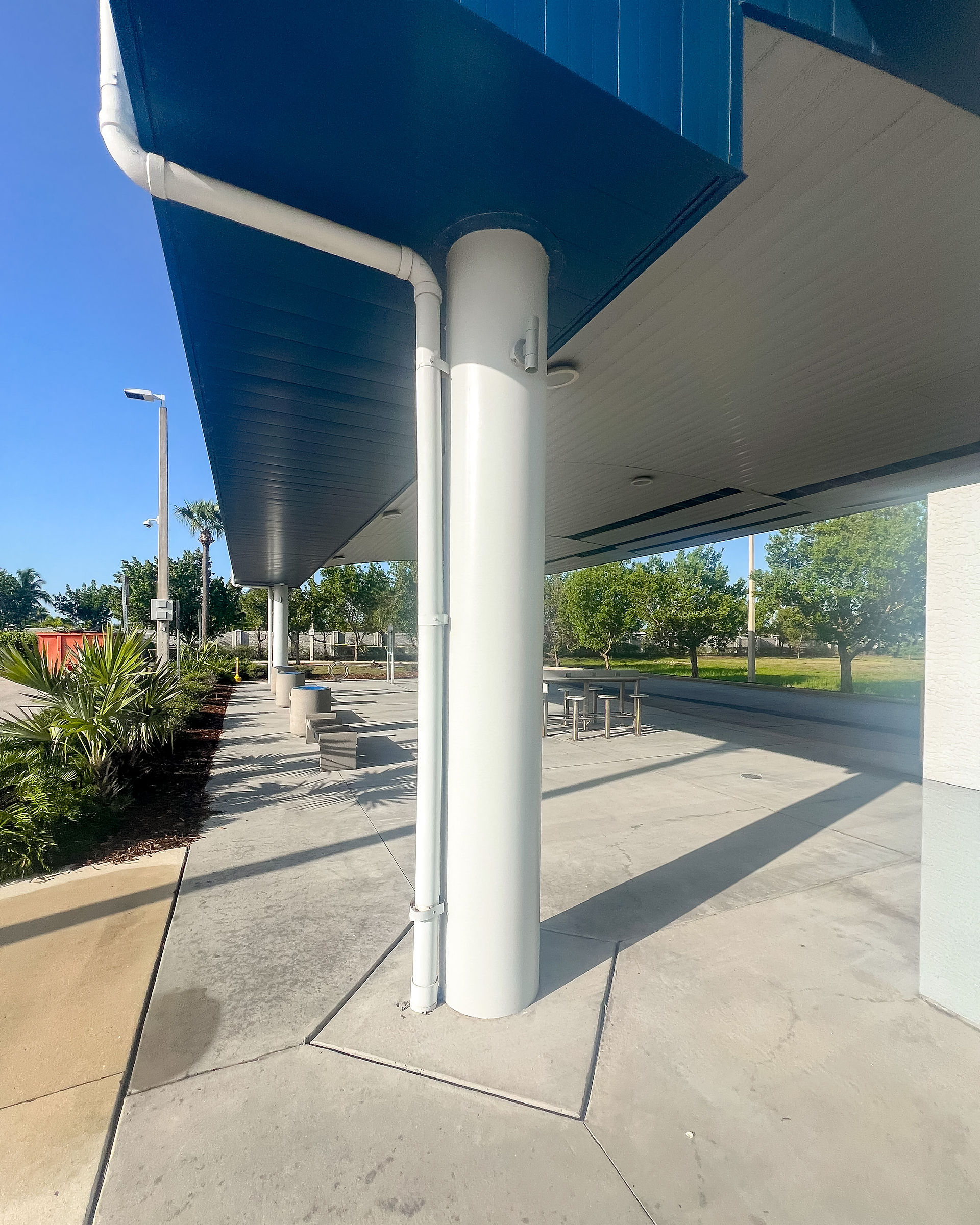
Phase One: Restoring the Support Poles
Work started at the base of the canopy, with the structural poles that carry the load of the entire roof system. After years of Florida heat, humidity, and salt air off the coast, corrosion had taken hold on the steel. The crew sanded out the corrosion down to sound metal, repaired the surface, and repainted every pole to hold up against the elements going forward. It's not a glamorous phase of a project, but it's the one that determines how long the rest of the structure lasts.
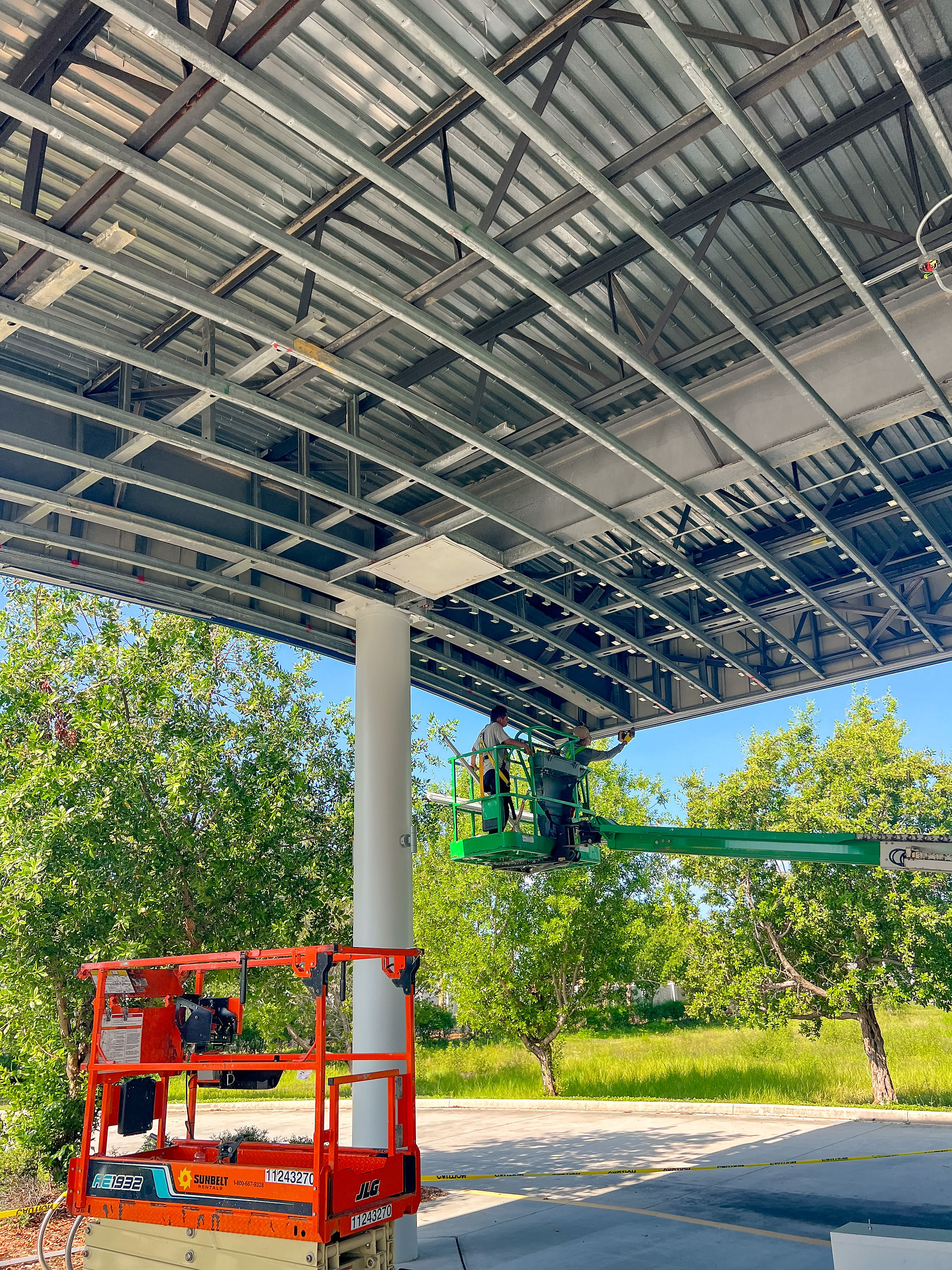
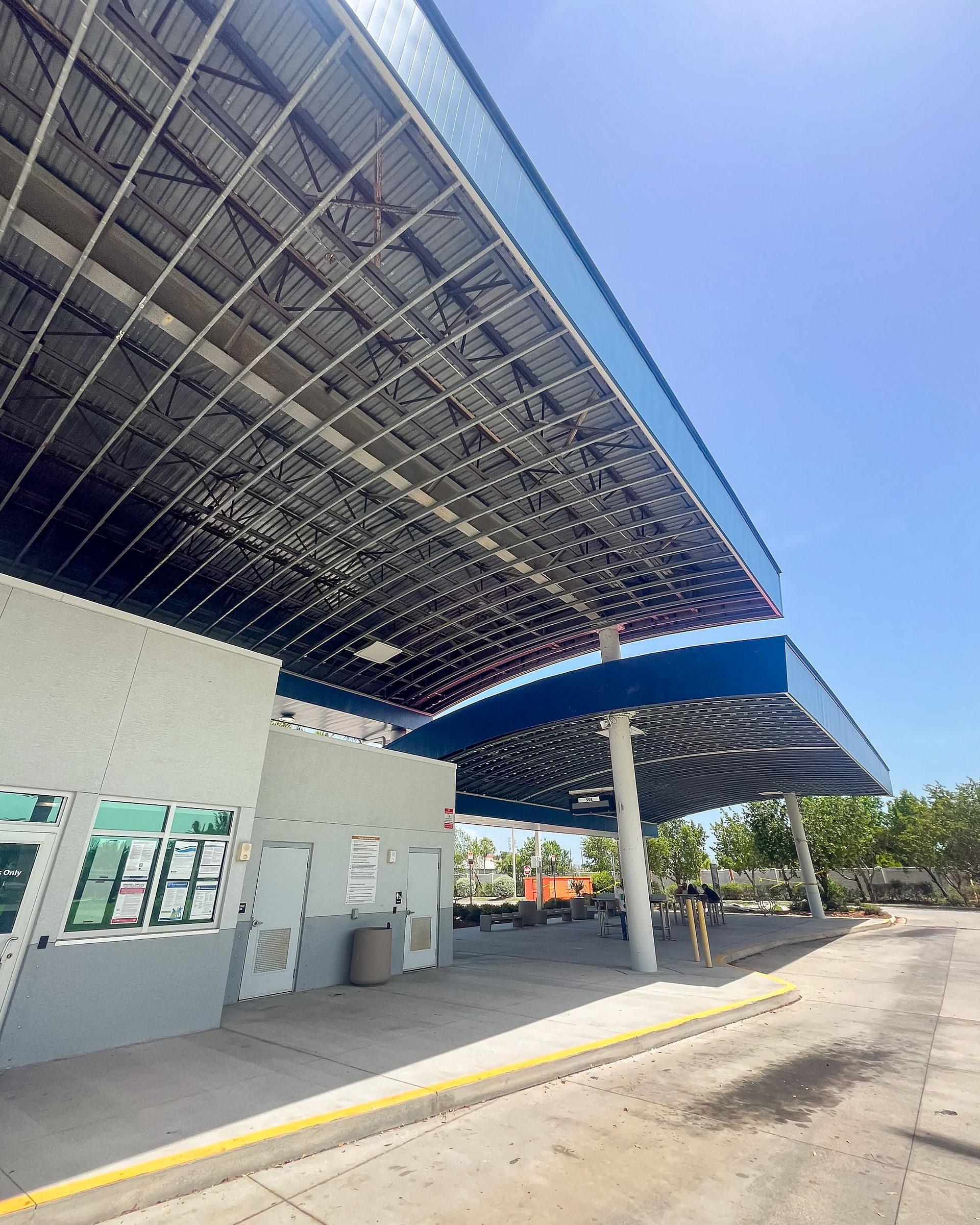
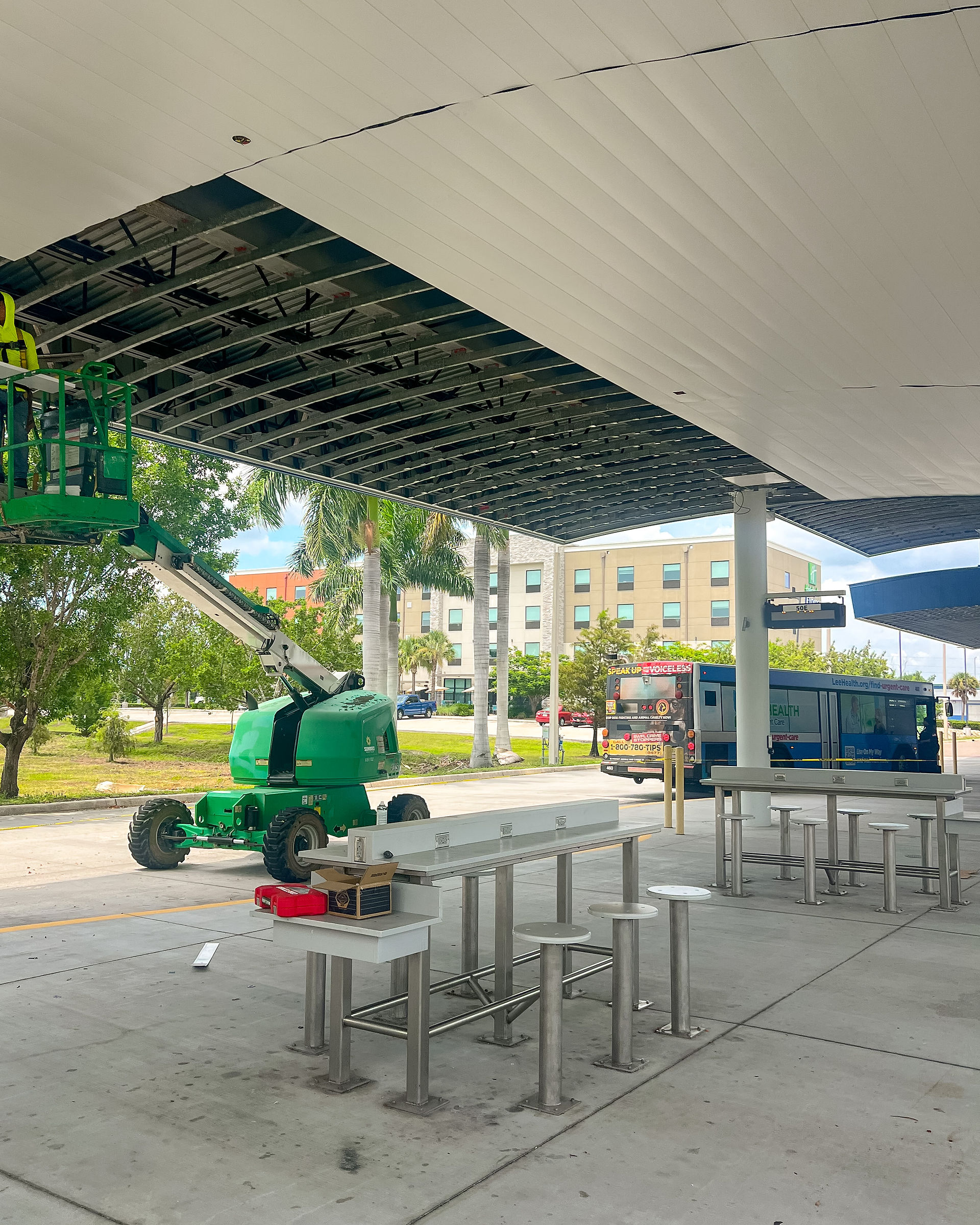
Phase Two: Rebuilding the Canopy Framing
With the poles restored, the crew moved up into the structure itself, working from lifts to inspect the steel framing that supports the roof over this high-traffic transit stop. That meant assessing every truss and connection for wear, repairing what needed it, and doing it all without closing the stop to the riders, trolleys, and buses still moving through it daily.
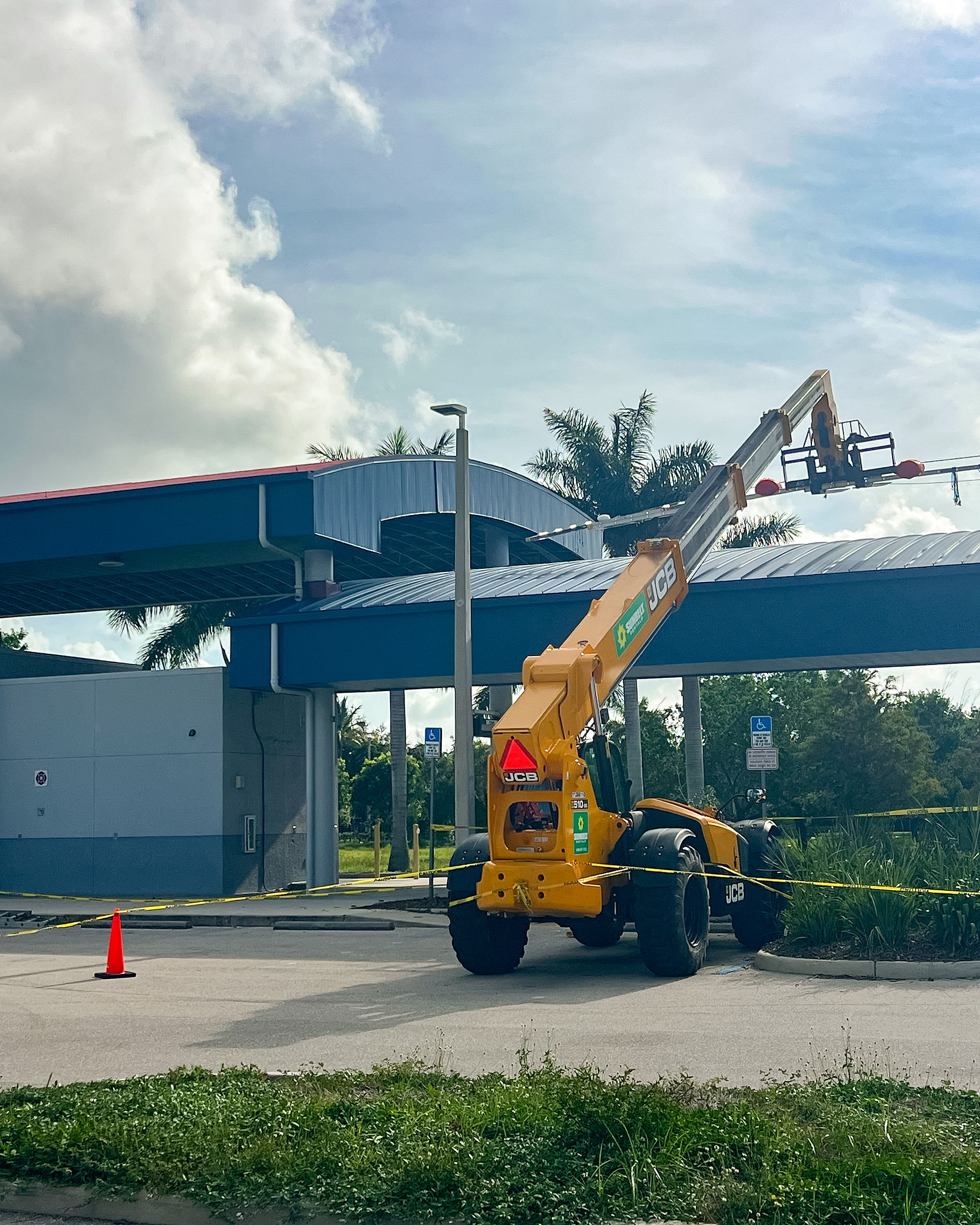
Phase Three: Sealing and Prepping the Roof
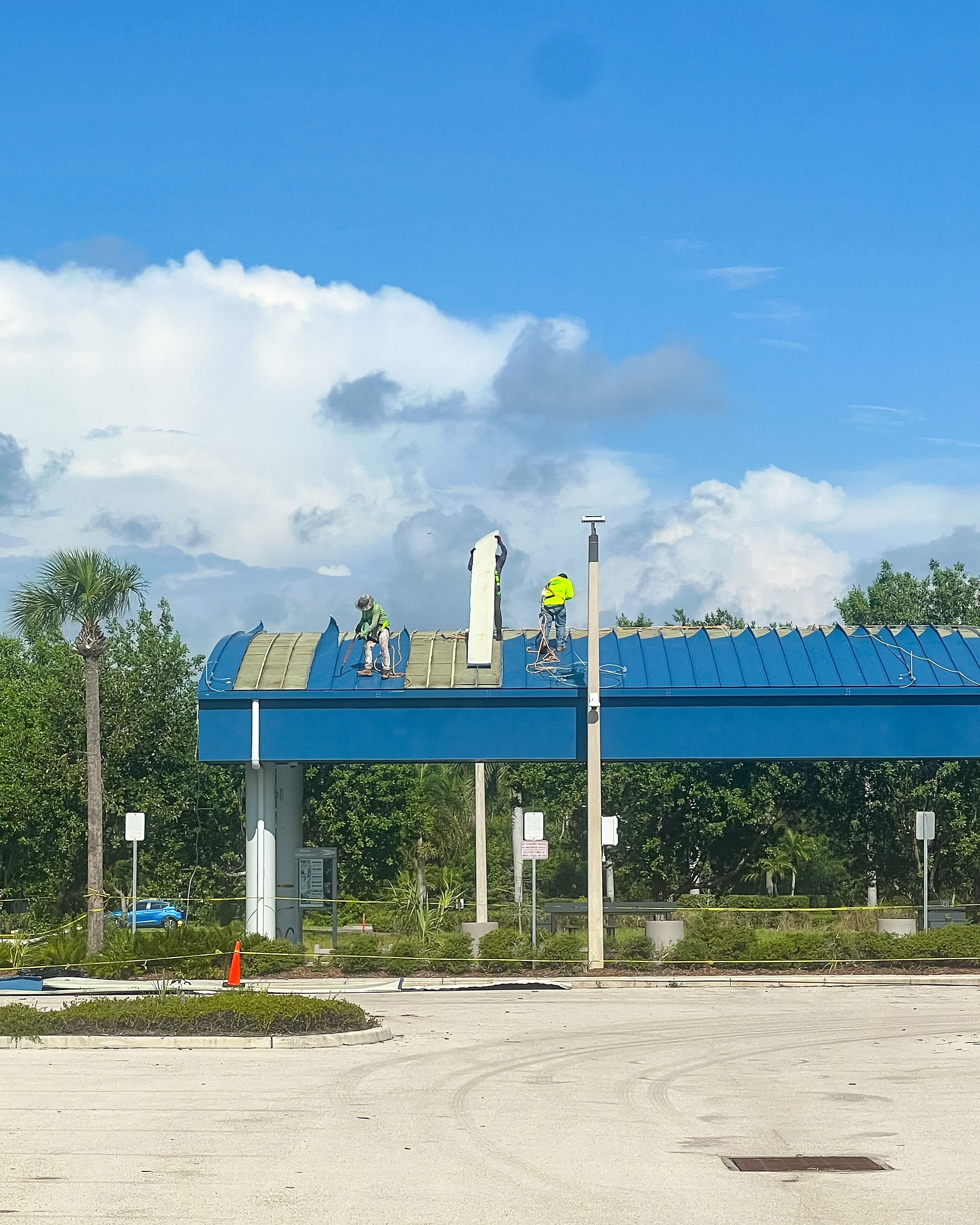
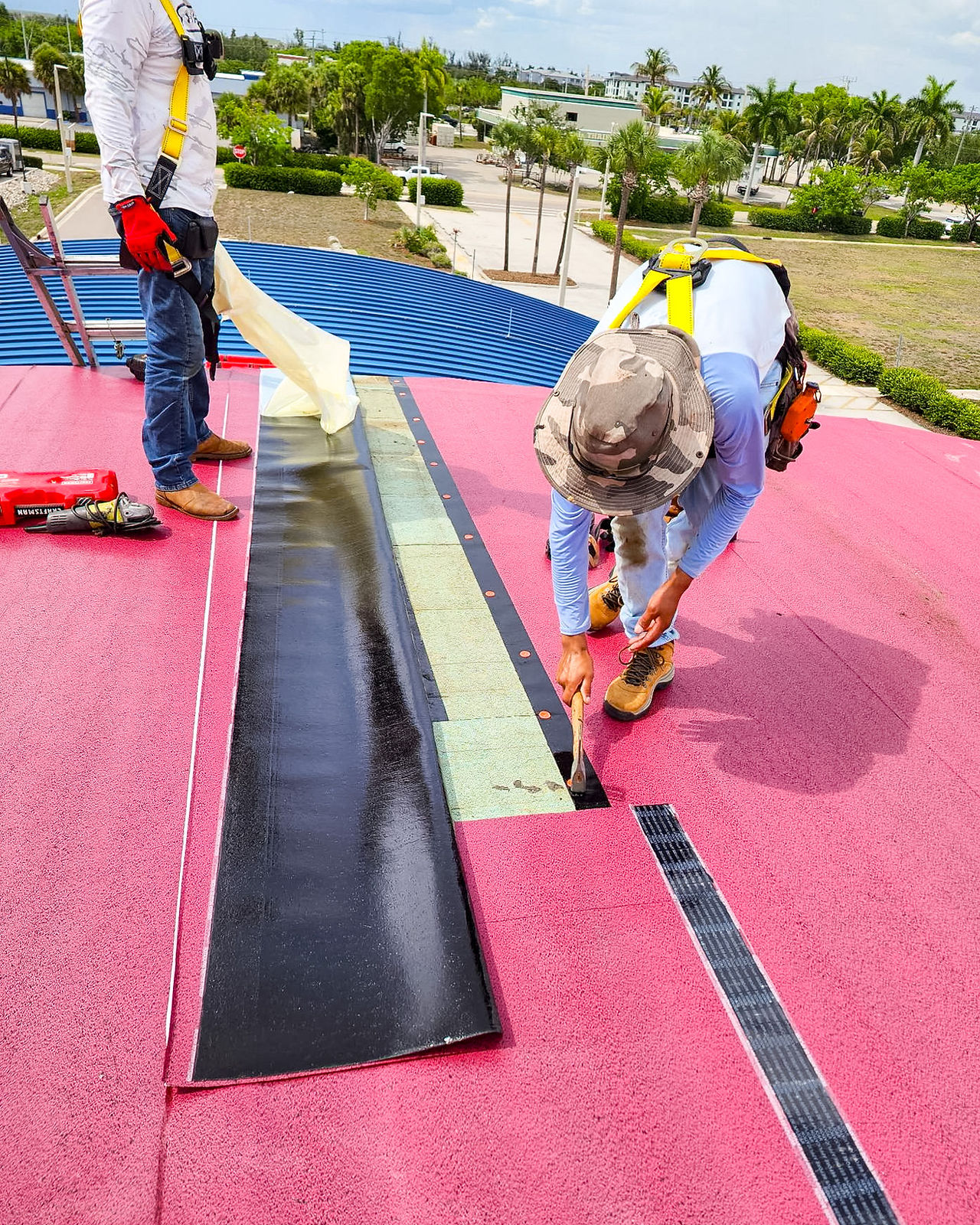
Poles done, structure done. The current phase is the canopy roof itself. The crew is sealing seams across the roof deck and prepping the surface for a new roofing system, with fresh trim panels staged on-site and ready to go up next. Roof work on a curved transit canopy isn't a standard flat-roof job; every seam and transition has to be sealed correctly to keep water out of a structure that's rarely, if ever, going to be easy to access again once it's finished.
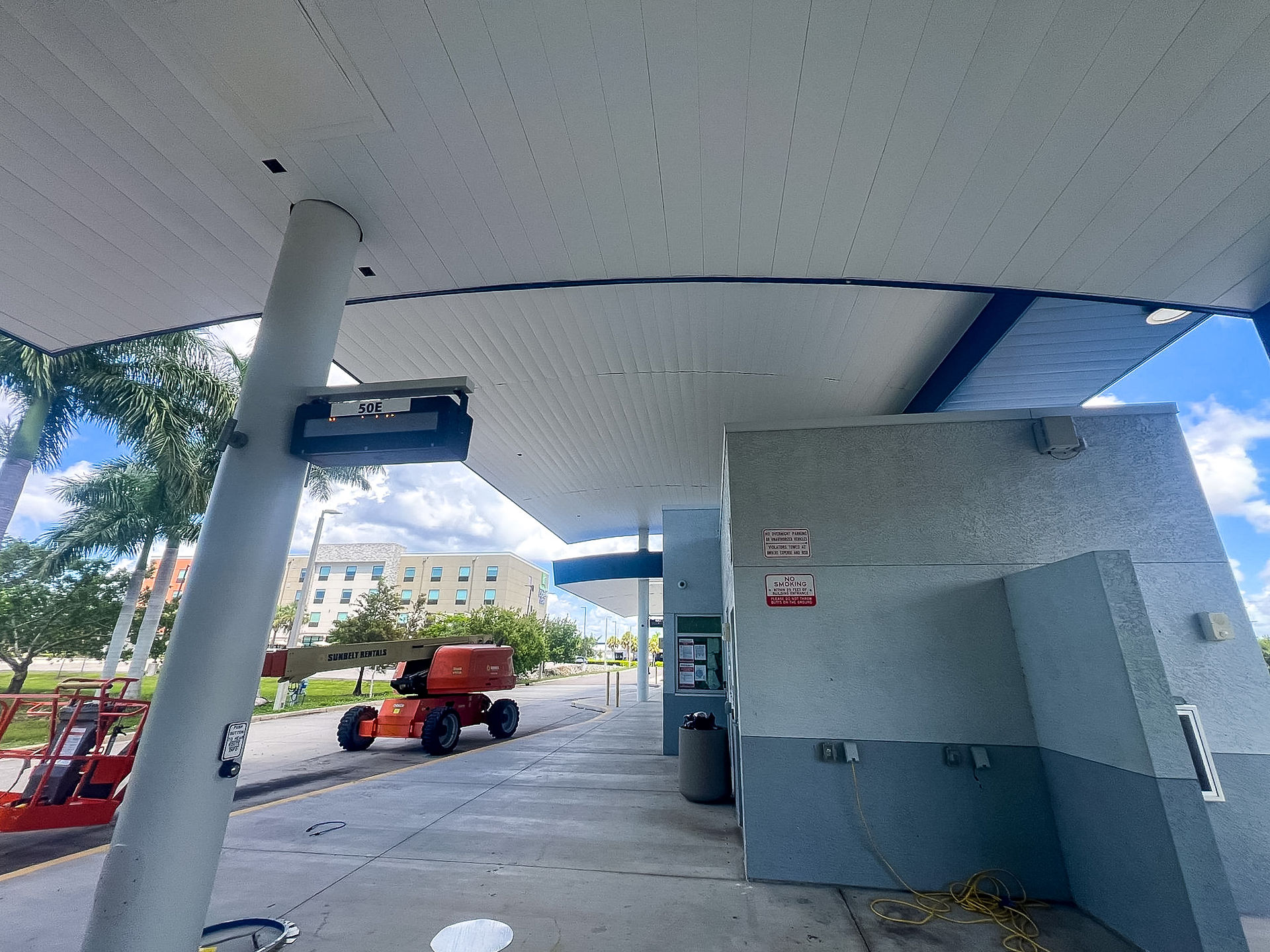
Closing Out With New Soffit Panels
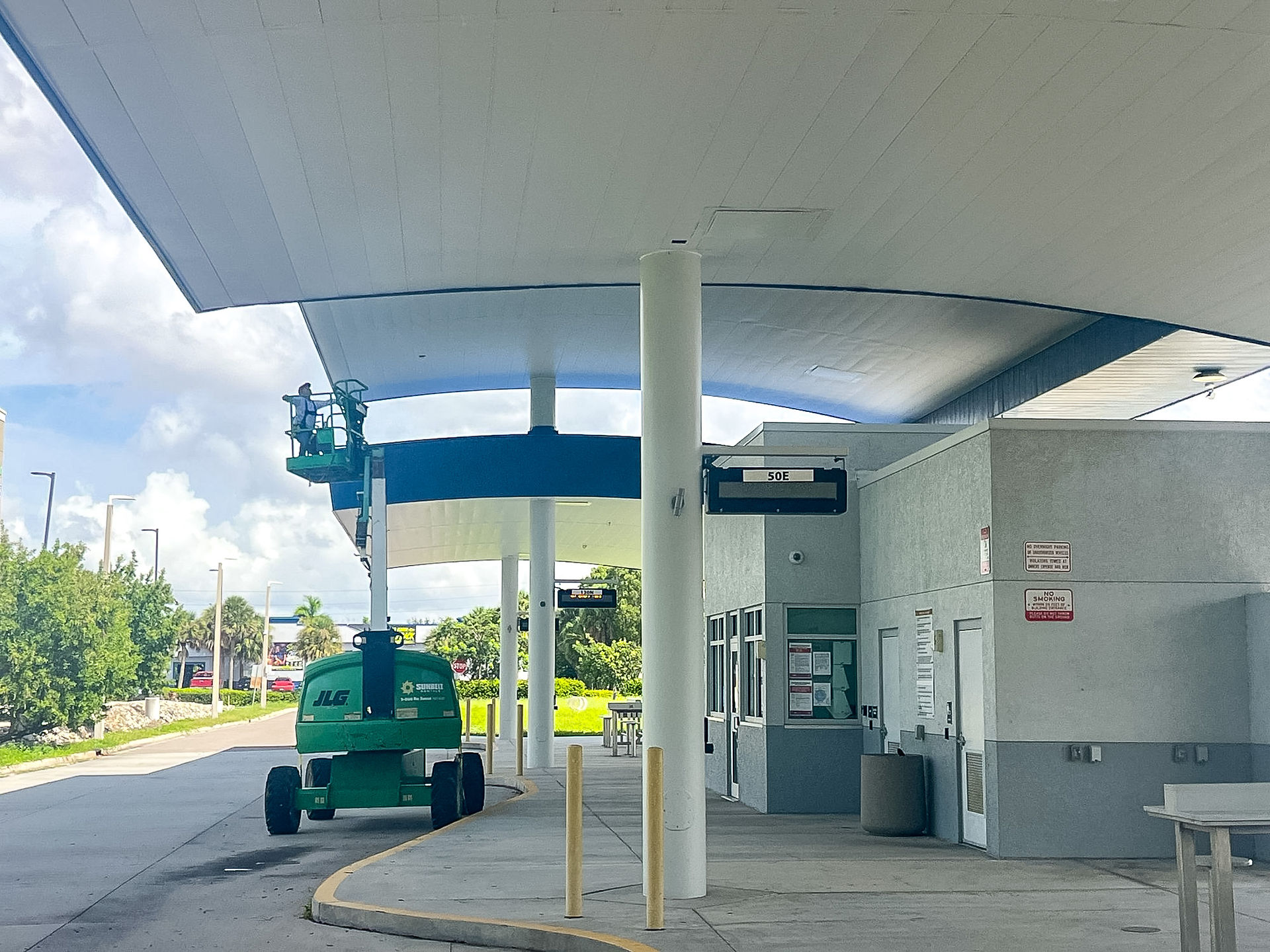
Once the roofing system is in, the final piece is new soffit paneling across the ceiling of the canopy. That finish layer covers and protects the framing above it, and it's what riders waiting at the stop will actually see overhead once the project wraps — a clean, finished underside instead of exposed structure.
Why This Kind of Work Matters
Public transit infrastructure takes a beating in Florida. Projects like the LeeTran Beach Park & Ride rehab are a good example of what it takes to restore a facility like this correctly: a phased approach, careful coordination around an active site, and materials and methods built to hold up against the same conditions that caused the damage in the first place. It's the kind of work municipalities, transit authorities, and government agencies across Florida are increasingly looking for as their own aging infrastructure comes due for rehabilitation.
Rehabilitating an occupied, high-traffic public facility takes a different level of coordination than a typical commercial buildout.
Maloney Construction is managing the LeeTran Beach Park & Ride canopy rehab from the poles up, keeping the facility operational for riders throughout. Contact our team to talk through your municipal, transit, or public infrastructure project.