.png)
Why National Retailers and Multi-Location Operators Trust Regional Contractors for Deferred Maintenance Programs

A smarter approach to portfolio-wide facility upkeep — and why the right construction partner makes all the difference.
If you manage facilities across multiple locations — whether retail stores, fitness studios, hotels, or commercial properties — you already know that deferred maintenance doesn't disappear. It accumulates. And when it finally comes due, the scope, cost, and disruption can be significant if the wrong contractor is executing the work.
Large-scale operators and asset managers across Florida are increasingly bringing in experienced regional commercial contractors to handle portfolio-wide deferred maintenance programs — not just one-off repairs. Here's why that approach works, and what to look for in a construction partner when the stakes are spread across dozens or hundreds of locations.

What Is a Deferred Maintenance Program — and Why Does It Matter?
Most multi-location operators conduct periodic facility assessments — property condition inspections that catalog everything from cosmetic wear to structural concerns, code compliance gaps, mechanical issues, and system deficiencies. These inspections are a standard part of asset management, and the output is a prioritized list of repairs that need to happen before the next inspection cycle.
The challenge: executing that list efficiently across multiple properties, often on tight timelines, without disrupting daily operations or the customer experience.
That's where a capable regional contractor becomes a critical partner — not just a vendor.
What National Operators Actually Need From a Contractor
When a retailer, hotel group, fitness brand, or property management firm is executing a deferred maintenance initiative, the expectations go well beyond showing up with tools. Here's what experienced operators tell us they're actually looking for:
Consistency across locations. Work quality shouldn't vary based on which crew shows up. A contractor executing across multiple Florida locations needs documented processes, experienced project management, and the same standards at every site.
Minimal disruption to operations. Retail locations can't close for a week. Hotel rooms need to turn over. Gyms have members walking through the door every morning. The best commercial contractors schedule around your operations, work in phases when needed, and communicate proactively so you're never caught off guard.
Single point of accountability. When you're managing a large scope across multiple sites, you don't want to chase down five different subcontractors for updates. One contractor. One contact. One standard of accountability.
Scope management and documentation. Deferred maintenance programs involve detailed scopes of work. A good contractor doesn't just execute — they help you document completed work, flag items that evolved on-site, and produce the kind of organized records your asset managers and insurance carriers expect.
Speed without shortcuts. Inspections put operators on a clock. Work needs to be completed, documented, and signed off before the next review cycle. That requires a contractor who can mobilize efficiently, manage subcontractors, and hit milestones without compromising quality.
Common Scope Items in Retail and Commercial Deferred Maintenance
Depending on your inspection findings and property age, deferred maintenance programs for commercial facilities typically include:
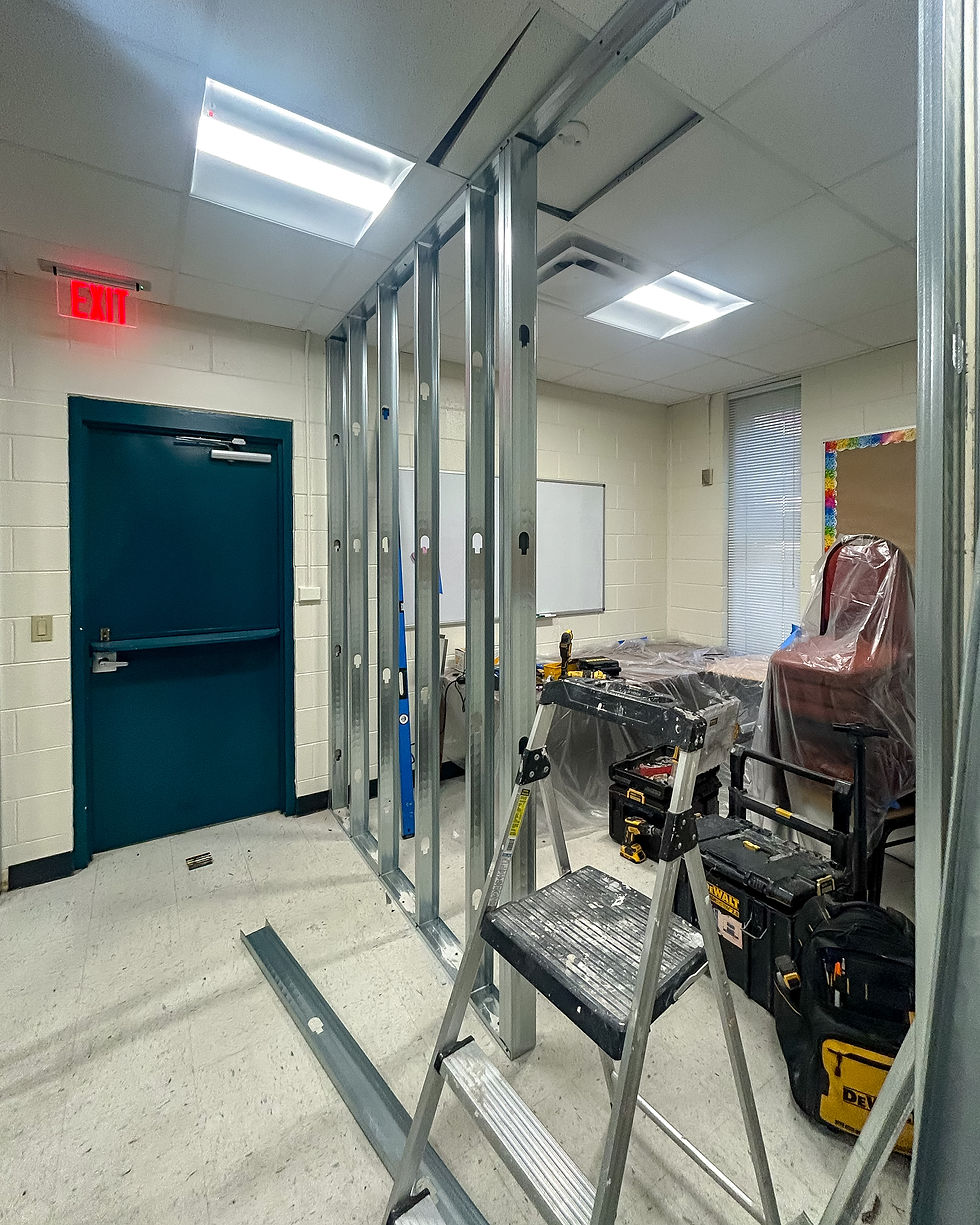
Interior finishes — flooring replacement, wall repairs, ceiling tile and grid work, paint throughout
Restroom renovations and ADA compliance upgrades
Storefront and entry updates — doors, glazing, hardware, signage substrate
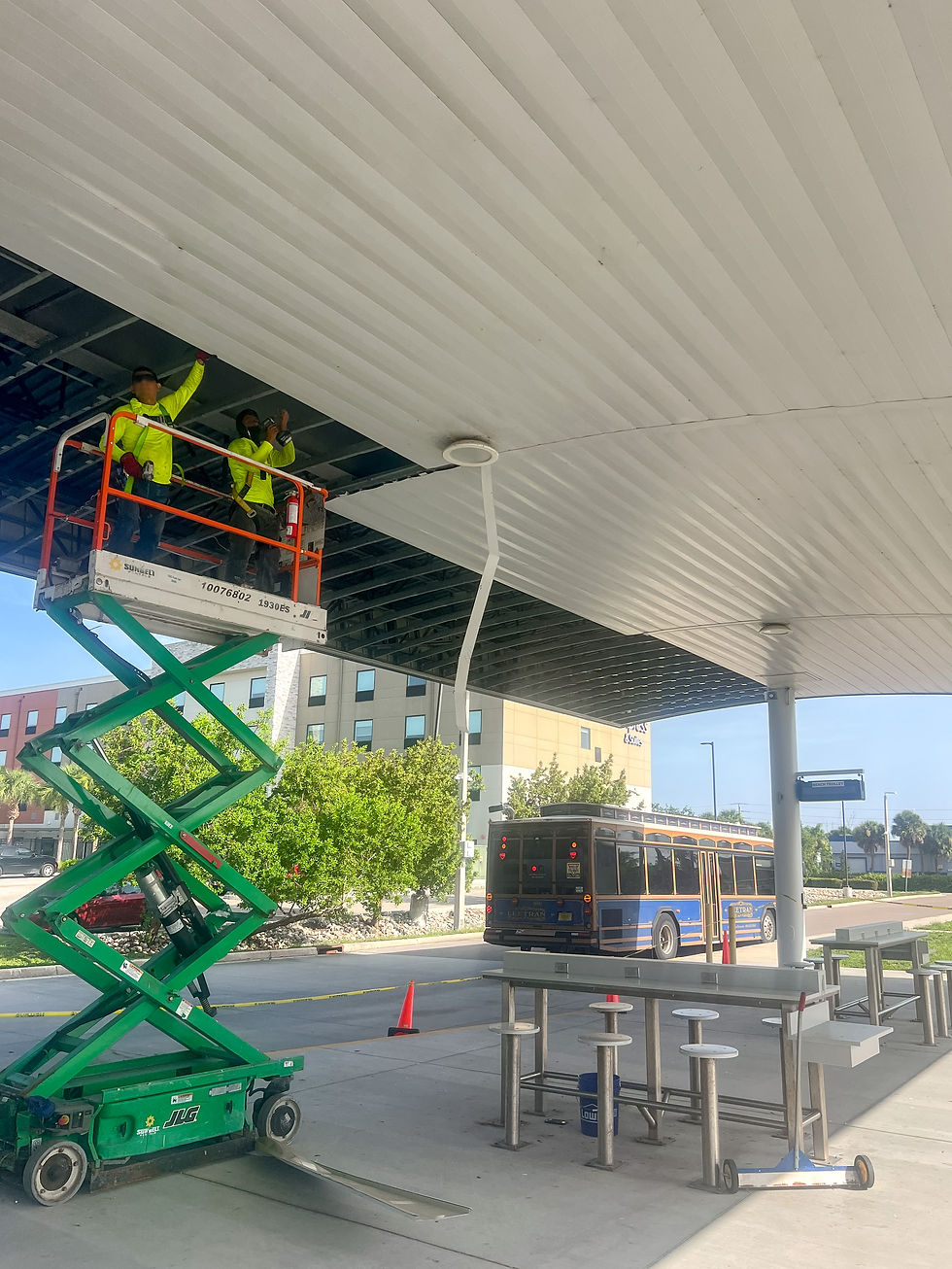
Roofing repairs and roof-to-wall transition work
HVAC-related interior work — diffuser replacement, duct repair, equipment curb work
Electrical panel and lighting upgrades
Plumbing fixture replacement and drain line repairs
Exterior repairs — caulking, sealant, concrete, façade patching
Life safety and code compliance items identified during inspection
In Florida specifically, storm exposure and humidity add layers of complexity. Properties that haven't had moisture intrusion addressed, siding or stucco properly sealed, or mechanical systems properly maintained face accelerated deterioration — which is why deferred maintenance programs in this market often carry more urgency than operators initially expect.
The Florida Factor: Why Regional Expertise Matters
National operators sometimes default to national contractors, assuming scale equals capability. But regional execution — especially in Florida — benefits from contractors who understand the local permitting landscape, have established relationships with inspectors and material suppliers, and know how the climate affects construction timelines and material selection.
Florida's permitting requirements vary by county. Material lead times fluctuate with storm season demand. And certain scope items — moisture remediation, impact-rated glazing, stucco system repairs — require specific expertise that generalist contractors don't always bring.
A regional Florida contractor with commercial experience isn't a compromise. It's frequently the smarter operational choice.
Working With Maloney Construction on Multi-Location Programs
Maloney Construction works with commercial operators, asset managers, property managers, and facility teams across Florida on deferred maintenance programs, facility refreshes, and capital improvement projects. We understand what it means to operate within a larger asset management framework — the documentation requirements, the operational constraints, the inspection deadlines.
Whether you're executing repairs across two locations or twenty, we bring the project management structure, trade expertise, and communication standards that multi-location programs require.
If your next property inspection cycle is on the horizon, now is the time to get your contractor aligned. Contact Maloney Construction to discuss your scope and timeline.